Key takeaways
- The main types of solar panels used in Australian homes today are monocrystalline panels featuring PERC, TOPCon, HJT or ABC cell technology.
- Older polycrystalline and thin-film panels are now uncommon in residential solar installations.
- N-type solar cells generally offer better efficiency and lower degradation than older P-type technology.
- ABC (All Back Contact) technology maximises the surface available to capture sunlight, making it particularly useful for homes with limited roof space.
- The best solar panels for your home depend on your roof, budget, shading and energy needs.
When comparing different types of solar panels, you’ll often come across three main options: monocrystalline, polycrystalline and thin-film. While these have been around for years, solar technology has come a long way.
Today, most residential solar panels use monocrystalline silicon, but there are different technologies that affect how efficiently they turn sunlight into electricity.
Understanding these differences can help you choose the right panels for your home, especially when considering your roof space, energy needs and Brisbane’s hot summers.
In this guide, we’ll explain the different solar panel technologies available today, how they compare and what to look for when choosing a system.
Thinking about installing solar? Our Brisbane team can help you find a system that suits your roof, energy usage and budget. Learn more about our Solar Panel Installation services.
What Are the Four Types of Solar Panels?
Solar panels, also called photovoltaic panels or PV panels, use solar cells to convert sunlight into electrical energy. While there are traditionally three solar panel types based on their materials, modern residential systems are better compared by their cell technology.
The four main technologies are:
- PERC (Passivated Emitter and Rear Cell): An established technology that improves the efficiency of conventional silicon solar cells by reducing energy losses.
- TOPCon (Tunnel Oxide Passivated Contact): A newer design that reduces electrical losses and offers higher efficiency than traditional PERC panels.
- HJT (Heterojunction Technology): Combines crystalline silicon with thin layers of amorphous silicon to improve efficiency and temperature performance.
- ABC (All Back Contact): Places electrical contacts on the rear of the solar cell, allowing more sunlight to reach its front surface.
All four typically use monocrystalline silicon, but their internal designs affect power output, performance and cost. For homeowners comparing solar panel options, these differences are often more useful than the older monocrystalline versus polycrystalline distinction.
N-Type vs P-Type: Which Is Better?
You’ll also see solar panels described as N-type or P-type. This refers to how their silicon solar cells are manufactured. Both use crystalline silicon, but different materials are added to influence how electrical charges move through the cell.
P-type technology has been widely used for decades, particularly in traditional PERC panels. N-type technology, commonly found in modern TOPCon, HJT and ABC panels, generally offers higher efficiency and improved long-term performance.
N-type panels also tend to experience less light-induced degradation and can perform better in high temperatures. That’s particularly relevant in Brisbane, where roof temperatures can climb well above the surrounding air temperature during summer.
The trade-off might be that N-type panels can cost more upfront, and some newer designs have less long-term field data than established PERC technology.
How can you tell which type you have? Check your solar panel’s model number or manufacturer datasheet. Appearance alone won’t reliably tell you.
What Is ABC (All Back Contact) Technology?
ABC technology is one of the more significant developments in modern solar panel design.
How ABC Works
Traditional solar cells have thin metal contacts across their front surface. These collect electricity, but they also block a small amount of incoming sunlight.
ABC solar cells move these electrical contacts to the rear surface, leaving the front unobstructed. This means more sunlight can reach the active surface of the cell, helping increase energy production within the same physical footprint.
Aiko’s ABC technology also uses silver-free metallisation and produces a uniform, all-black appearance without visible front gridlines.
Why It Matters on an Australian Roof
Higher efficiency means more power can be generated from the same amount of roof space. That’s useful when a home has limited usable roof area, multiple roof angles or sections affected by shading.
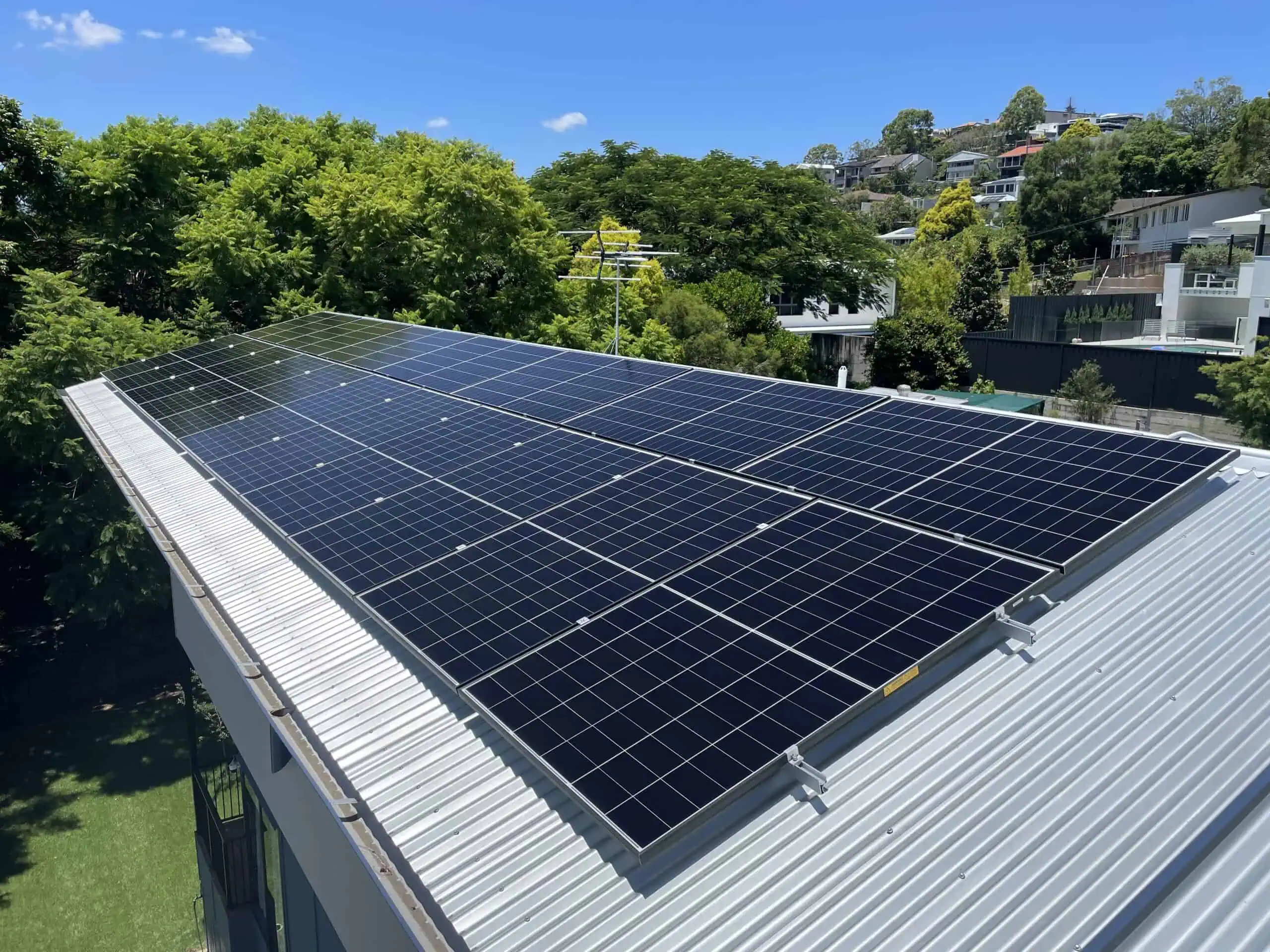
3D Energy now installs Aiko Neostar 3S and 3P panels, which offer several practical advantages:
- High efficiency: More power output per square metre compared with many conventional panels.
- Improved heat performance: A favourable temperature coefficient helps reduce power losses as panel temperatures rise.
- Partial shade optimisation: Designed to reduce the impact of some shading conditions on energy production.
- Micro-crack resistance: Cell design features intended to reduce vulnerability to certain forms of mechanical damage.
- Flexible installation: More accommodating clamping zones can help installers work around different roof purlin spacings.
The team designs systems ranging from approximately 10kW to 46kW, where roof layout and available space can significantly influence panel selection.
For homeowners wondering how many solar panels they need, panel efficiency is an important part of that calculation.
Why 3D Energy Installs Aiko Panels
Not all monocrystalline solar panels deliver the same performance. 3D Energy has moved to Aiko Neostar 3S and 3P models as the older 2S range is superseded.
The decision reflects the benefits of ABC technology, including high efficiency, improved temperature performance, partial shade optimisation and greater flexibility when working with challenging roof structures.
Aiko has also received recognition through SolarQuotes Installers’ Choice Awards, while its approved products and Australian support arrangements provide additional considerations for homeowners comparing manufacturers. However, Aiko is relatively new to the Australian market compared with some established solar brands. Its long-term local performance history is therefore shorter.
That’s why it’s important to assess the exact panel model, warranty conditions, manufacturer support and installation requirements rather than relying on brand reputation alone.
Homeowners near the coast should also ask about corrosion ratings and whether their chosen panels are approved for the property’s exposure conditions.
What Happened to Polycrystalline and Thin-Film Panels?
You’ll still find polycrystalline and thin-film solar panels in older comparison guides. However, neither is commonly selected for new Australian residential rooftop systems.
Polycrystalline solar panels use silicon cells made from multiple crystals, giving them a recognisable blue, speckled appearance. They were once a popular, lower-cost alternative to monocrystalline panels. However, their lower efficiency and the narrowing price difference have made them less competitive.
Thin-film solar panels use a thin layer of photovoltaic material rather than conventional silicon wafers. Technologies include amorphous silicon (a-Si), cadmium telluride and copper indium gallium selenide (CIGS). Some thin-film panels are lightweight or flexible, making them useful for specialised applications such as caravans, boats and certain commercial installations.
Their generally lower efficiency means more surface area is needed to generate the same electricity as modern crystalline silicon panels. If you’re offered either technology for a new residential installation, it’s worth asking why it has been recommended.
Which Solar Panel Type Is Best?
For most Australian homes, modern N-type monocrystalline panels are a strong starting point.
ABC technology is particularly attractive when roof space is limited or you want to maximise the amount of solar power generated from a smaller area. However, the most efficient panels aren’t automatically the best financial choice for every household.
If you have a large, unshaded roof, a quality TOPCon system may meet your energy needs without the additional cost of premium ABC panels.
Consider:
- Available roof space and orientation
- Shading throughout the day
- Household electricity consumption
- Installation cost and expected energy output
- Product warranties and Australian manufacturer support
- How long you expect to remain in the property
A reputable solar installer should explain the trade-offs rather than simply recommending the panel with the highest efficiency rating. It’s also worth considering how to save with solar by matching electricity generation to your household’s usage patterns.
Lifespan, Downsides and Why Some People Replace Their Panels
How Long Do Solar Panels Last?
Quality solar panels commonly have an expected operating lifespan of 25–30 years or longer, although their power output gradually decreases. This is called degradation.
Modern N-type panels generally have favourable degradation characteristics, but the exact rate and performance warranty depend on the manufacturer and model.
Learn more about how long solar panels last in Australia.
What's the Biggest Disadvantage?
The upfront installation cost remains a consideration. Solar panels also generate electricity during daylight hours, which doesn’t always match when households use the most power.
A solar battery may help store excess energy for later use, although its financial value depends on household consumption and system costs.
Why Do People Replace Their Solar Panels?
Some homeowners replace older systems because they’re undersized, have declining performance or use equipment that’s difficult to repair. Others upgrade when replacing a roof or after an inverter failure.
Modern high-efficiency panels can also allow a larger solar system to fit within the same roof area. If your existing system is underperforming, professional solar repairs and maintenance may be a better first step than replacement.
What Is the 33% Rule for Solar Panels?
In Australian solar installations, this commonly refers to sizing the solar panel array up to 133% of the inverter’s rated capacity under applicable system design and incentive requirements.
For example, a 5kW inverter may be paired with approximately 6.6kW of solar panels. This can help improve energy generation during lower sunlight periods, although inverter limits and current installation rules must be considered.
How Do I Tell What Kind of Solar Panel I Have?
Start with your original installation invoice, system documentation or the manufacturer’s model number. Some inverter monitoring apps also provide equipment details.
Older blue, speckled panels are often polycrystalline, while all-black panels without visible gridlines may use back-contact technology. However, appearance isn’t definitive.
Never climb onto your roof to check a panel label. For more information, read our guide to solar panels in Brisbane.
Getting the Right Technology on Your Roof
Choosing solar panels is only part of getting a system that performs well. Roof design, shading, inverter selection and installation quality all influence how much electricity your system generates.
With more than 30 years of industry experience, an in-house installation team and a 10-year workmanship warranty, 3D Energy helps South East Queensland homeowners make informed solar decisions.
Get in touch with 3D Energy to discuss the right solar technology for your home.